Bi Curious Dating: A Practical Guide for NYC Men
You're sitting in a Manhattan apartment, thumb hovering over Grindr, Scruff, or Hinge. You're curious about men, but you don't want to be treated like a novelty, pushed into a role, or recognized by someone from work. An app can give you control, yet it can also turn a real question about attraction into a rushed exchange. A private men-only night can offer a different pace, but only if you understand what you want and how the room works.
Bi curious dating gets easier when you stop treating curiosity as a performance. You don't need a perfect label, a polished sexual history, or a dramatic coming-out speech. You need a realistic first goal, clear boundaries, and enough honesty that another man can decide whether the situation suits him too.
Table of Contents
- Getting Honest About What You Actually Want
- Where Bi Curious Men in NYC Actually Meet Each Other
- Getting Into a Private Invite-Only NYC Night
- Saying What You Mean in the First Conversation
- Consent, Boundaries, and House Rules in Practice
- Sexual Health, Privacy, and Following Up After
- Your First Two Weeks A Practical Checklist
Getting Honest About What You Actually Want
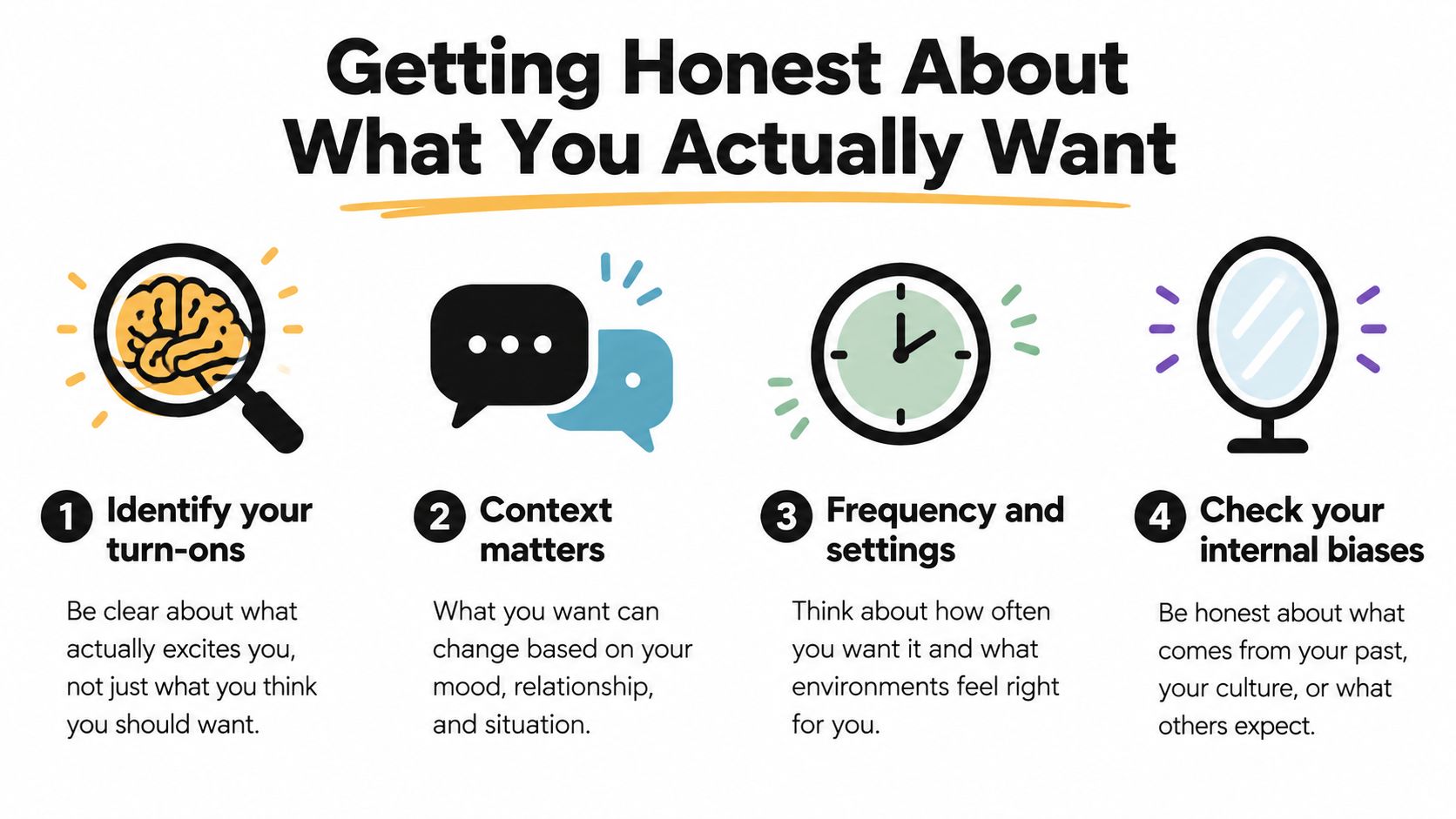
Before you open an app or answer an invitation, run a quick audit. This isn't therapy and it doesn't require a grand declaration about your identity. It's a calibration exercise for a man deciding whether he wants a conversation, a sexual experience, a date, or a first look at a scene he hasn't entered before.
Write the answers in one note on your phone. Reread it before each new step, especially before agreeing to meet someone or attend a private event.
Four questions that prevent a bad first decision
What specifically turns you on? Separate a fantasy from an in-person preference. You may like the idea of kissing a man and still want a slow conversation before any touch. You may be curious about a particular sexual act but not want it with a stranger. Both statements can be true.
What do you want from the first meeting? Name the outcome plainly: a drink and conversation, a kiss, oral sex, anal sex, a repeat hookup, a new friend, or nothing physical yet. A first goal isn't a contract. It gives you a starting point.
What won't you cross tonight? Decide your hard lines before someone attractive is standing close to you. Include touch, sexual acts, substances, photos, and leaving the venue with someone. Don't negotiate against yourself because you feel flattered or nervous.
What needs to stay private? Think about work, family, roommates, and your digital footprint. Privacy isn't shame. It's a practical need, and you should tell a potential partner enough to avoid accidental exposure without handing over your entire personal history.
The useful distinction is between curiosity and impulse. Curiosity can move slowly and still be real. Impulse often accepts a scenario in the dark that sounded exciting at home only because you hadn't pictured the actual person, room, pace, or pressure.
If you want more help separating nerves from genuine confidence, keep this confidence-building guide alongside your note. The aim isn't to label yourself in advance. The aim is to arrive with choices still available.
Where Bi Curious Men in NYC Actually Meet Each Other
New York gives you several routes into men's dating and sexual communities, but they don't offer the same experience. Apps maximize reach and control. In-person cruising spaces move faster and demand sharper situational awareness. Invite-only nights reduce the size of the room and put more responsibility on screening, hosts, and shared rules.
No route is morally superior. Men rotate between them according to mood, privacy needs, confidence, and what they want that night.
| Path | Privacy | Pace | Disclosure burden | Vetting | Best for |
|---|---|---|---|---|---|
| Apps such as Scruff, Grindr, and Hinge | High control, but your profile can be seen by people you know | You set the pace, though messages can turn sexual quickly | State curiosity and intent early enough to avoid confusion | You vet one person at a time | Men who want distance, messaging, and a private first contact |
| The piers, the Eagle, and sauna-style spots | Less predictable privacy | Often immediate and physical | Usually handled in the moment | You rely heavily on your own judgment and the setting | Men ready for direct, in-person energy |
| Private curated men-only nights such as BAREHOUSE | Guest access is limited and the setting is private | More room for conversation and gradual contact | Still your responsibility, but the context makes directness easier | Hosts and entry processes add structure | First-timers who want a smaller, consent-led environment |
On Scruff, Grindr, or Hinge, don't bury the important detail under jokes. A line such as “I'm exploring attraction to men and looking for a respectful, low-pressure first meeting” gives a compatible match something useful to respond to. If account access or phone verification is slowing you down, this Grindr SMS verification guide explains the setup process without pretending the app will solve your uncertainty.
Cruising spots can remove the awkwardness of endless texting, but they can also compress your decision-making. At the piers, the Eagle, or sauna-style spaces, you may need to say no quickly, ask for space, and leave without explaining yourself. That's a valid choice, not a failure to be adventurous.
Private events sit between anonymous app contact and open cruising. A smaller room can make a first conversation feel less like an audition, but it doesn't remove your need to speak clearly. For more NYC-specific options and context, use this guide to a gay meetup in NYC.
Pick one path for your first two weeks. Dabbling in all three at once creates too many variables. Choose apps, a physical setting, or an invite-only event, then learn what your own reactions are telling you.
Getting Into a Private Invite-Only NYC Night
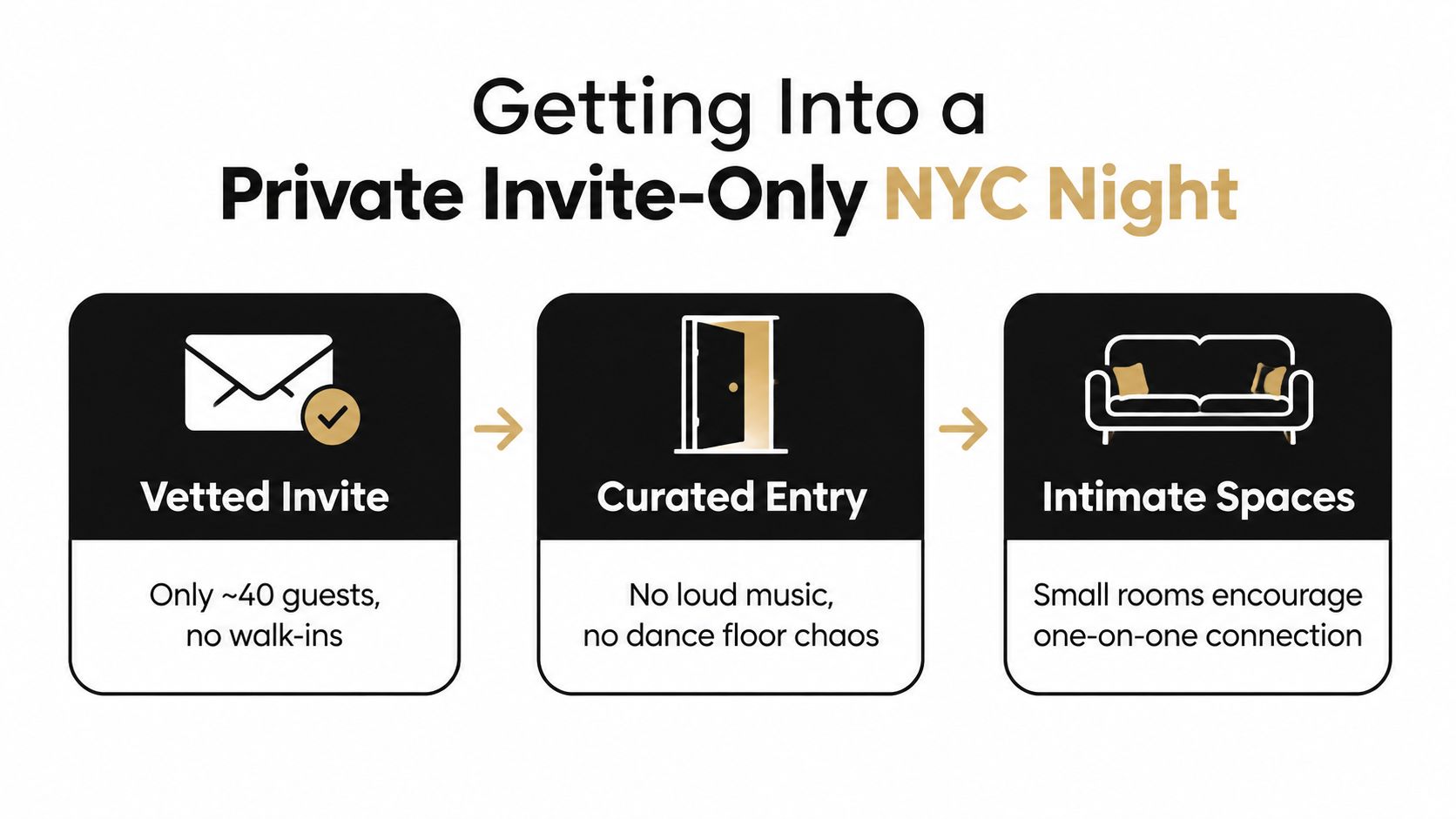
A private invite-only night isn't a bar with a velvet rope. BAREHOUSE describes itself as a private club for gay and bi men in New York City, with small, curated, invite-only parties in considered spaces. Its published information says every guest is reviewed before entry, with no walk-ins and no surprise plus-ones. Read the official BAREHOUSE experiences before deciding whether that format matches your first step.
Follow the process instead of trying to force access
Start with the official site or a trusted invitation. Read the posted rules before you submit anything, then complete the request form or contact the host through the channel provided. Wait for confirmation. Chasing the host, turning up without approval, or trying to bring a friend who wasn't invited tells the room that you haven't understood the format.
Arrive sober and on time. Bring your ID, minimal belongings, and shoes you can comfortably stand and walk in. Don't bring an uninvited guest, alcohol, or the assumption that sex happens the moment you arrive. A private room creates possibilities, not obligations.
What the door is actually doing
Hosts may screen guests, enforce a dress expectation, explain the rules at the beginning, and turn someone away when the fit isn't right. That's different from a bar or club, where anonymity and crowd movement can make it harder to know who is accountable. The smaller guest list gives you a clearer social environment, but you still have to make your own decisions.
Practical rule: Treat confirmation as permission to enter a specific social setting, not as a promise of access to any particular man.
Curiosity is expected in a space designed for gay, bi, and curious men. You don't need to arrive pretending to be experienced. You do need to respect the door, listen to the hosts, and let the evening develop without demanding that someone else resolve your uncertainty. For more practical guidance, read how to get invited to private parties.
Saying What You Mean in the First Conversation
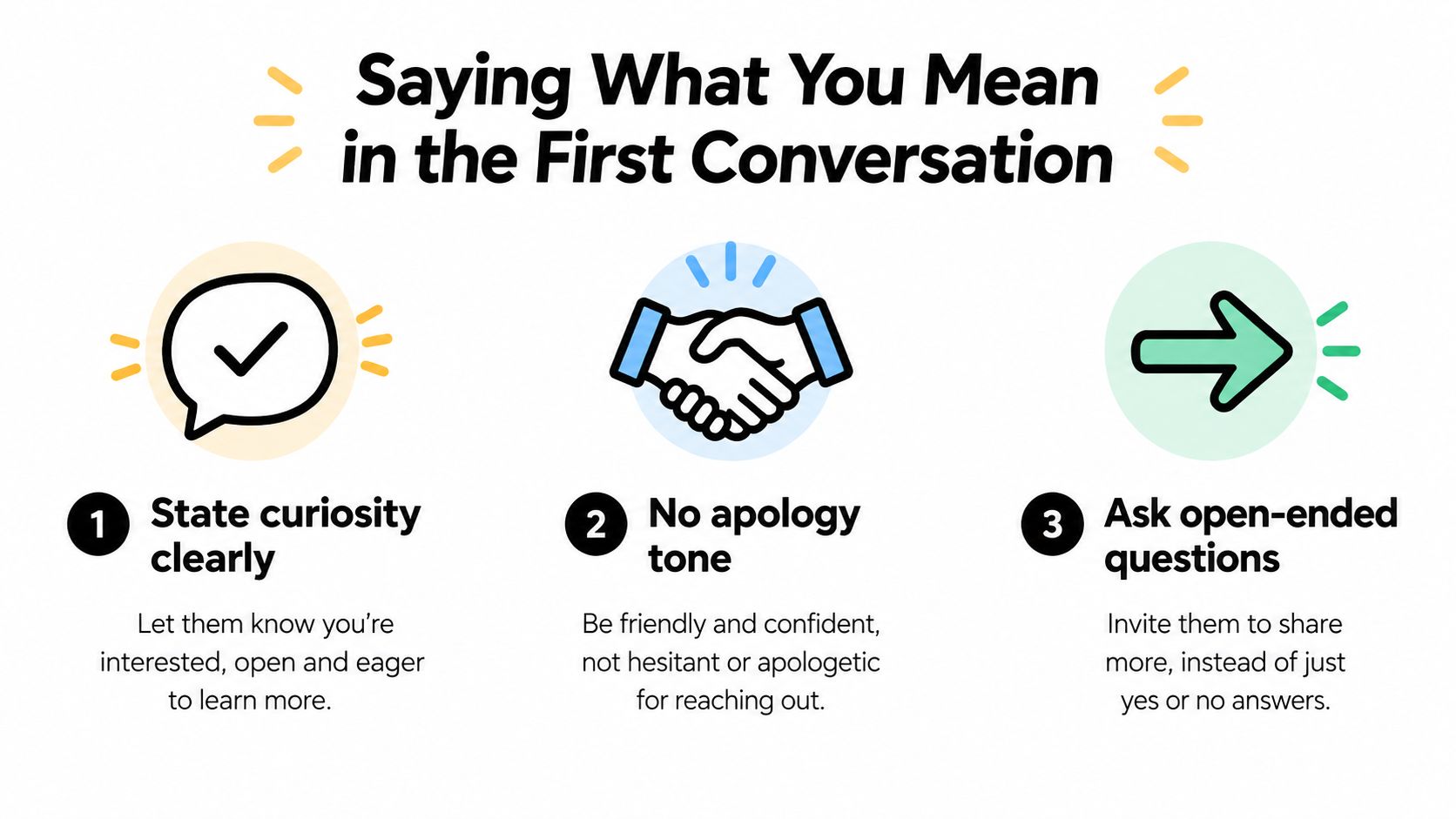
Your first line should sound like a man making a choice, not a man submitting an apology. “I'm curious about men” is usable. “I'm confused and probably bad at this” puts the other person in the position of managing your anxiety before you've even met.
On an app, read the profile for a real opening. Mention a neighborhood, interest, or stated preference, then add your context. “You mentioned late-night walks in Queens. I'm new to dating men and would rather start with coffee than rush into a hookup. Does that sound like your pace?” gives the other man something specific to answer.
Lines you can adapt
For a direct message:
- “I'm exploring attraction to men, and I'm looking for a respectful first meeting. Are you open to taking it slowly?”
- “Your profile caught my attention. I'm curious, but I don't want to pretend I've got every answer. What kind of first meet feels comfortable to you?”
- “I'm interested in kissing and seeing how the chemistry feels. I don't want to promise more before we meet. Is that clear enough for you?”
For a private event or bar conversation:
- “Hey, I'm new to this kind of room. Would you be open to talking for a few minutes?”
- “I like your energy. Can I sit with you, or would you rather have some space?”
- “I'm curious and taking things slowly tonight. Are you comfortable telling me what you're looking for?”
The timing matters. You don't need to send a life story before meeting, but you shouldn't hide the fact that you're exploring if it changes what the other man thinks he's agreeing to. Early disclosure of a same-sex partner was received more positively than delayed disclosure in experimental relationship-formation research, with recipients reporting higher liking, 5.85 compared with 5.40, and being about twice as likely to choose one-on-one interaction, an odds ratio of 2.02. See the PLOS ONE study on early disclosure for the underlying evidence.
A generous man answers your questions, gives you time, and doesn't turn your inexperience into entertainment. Walk away when someone pressures you to prove your sexuality, mocks a boundary, demands personal details, or treats your uncertainty as consent. “Thanks, but I'm not feeling the match. I'm going to head out” is enough.
Consent, Boundaries, and House Rules in Practice
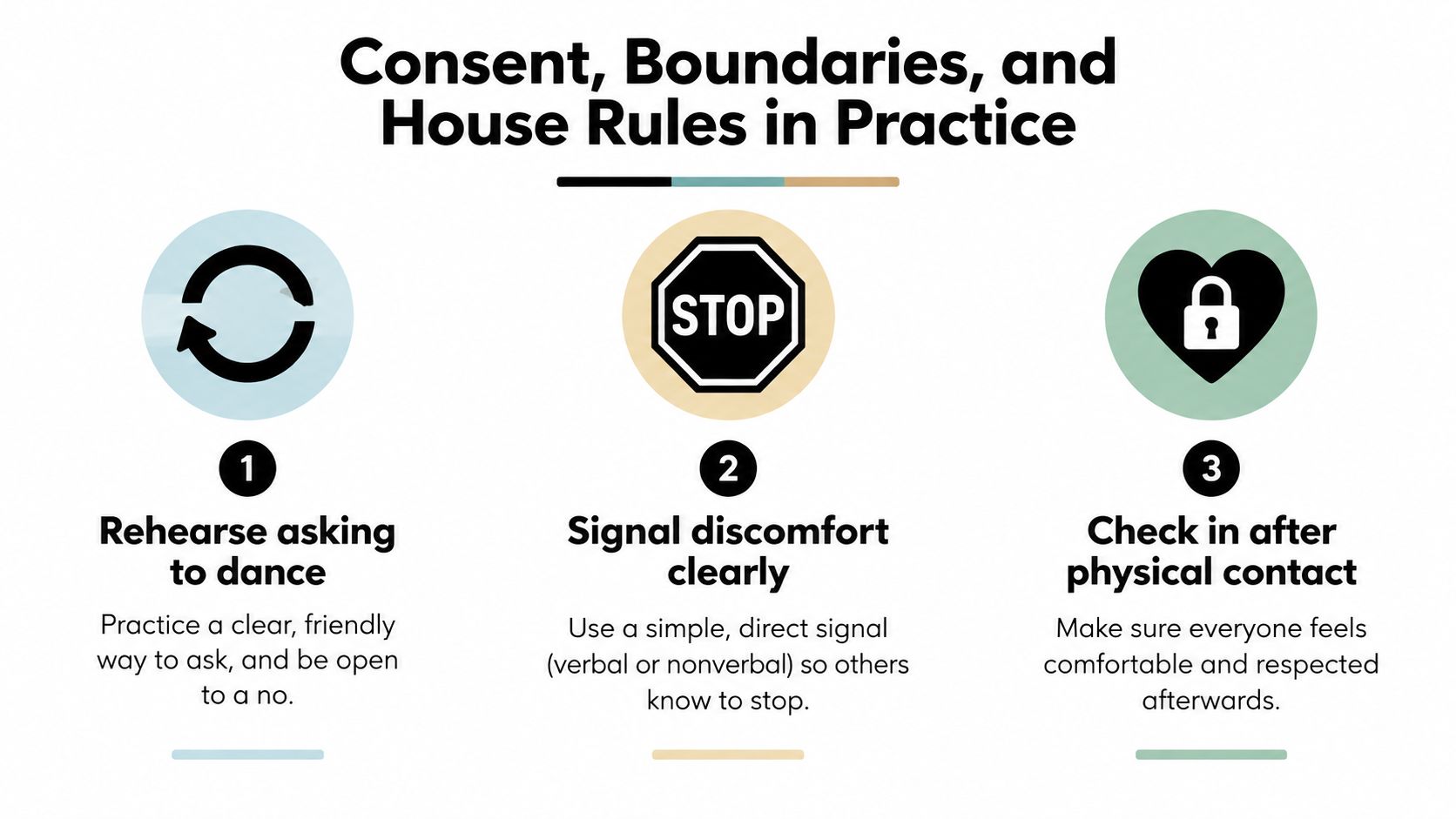
Consent at a private men-only night isn't a one-time yes at the door. It continues through every change in contact, location, and intensity. Asking to sit closer isn't permission to touch. A kiss isn't permission to escalate. Someone who goes quiet or freezes isn't giving you a complicated answer. Stop and check in.
BAREHOUSE's published rules are direct. Guests should ask before touching every time, treat “not right now” as final, stop immediately if someone freezes or goes quiet, and use hosts for on-site help when something feels off. The rules also state that devices are locked on arrival and that no photos leave the party. Read them before attending rather than relying on a friend's summary.
Use plain language in awkward moments
Try these phrases:
- “Can I touch your shoulder?”
- “Do you want to move somewhere quieter, or stay here?”
- “You said not right now. Got it.”
- “You seem quiet. Should we stop?”
- “I'm not interested, but thanks for asking.”
House rules belong to the event. They may cover entry, phones, photos, dress expectations, and host intervention. Personal boundaries belong to you and the man you're speaking with. A host can protect the structure of the room, but he can't decide whether you want a kiss or a particular sexual act.
If someone approaches you and you're not interested, don't invent an elaborate excuse. Decline once, create distance, and find a host if he keeps pushing. If you misread someone else's interest, apologize briefly and stop. Experienced hosts de-escalate by separating people, listening without turning the moment into a spectacle, and restoring a sense of choice. Model that behavior.
Before meeting anyone privately, you can also review practical guidance on how to run a background check before dating. Use it as a privacy and safety consideration, not as permission to investigate or expose someone.
Sexual Health, Privacy, and Following Up After
A first encounter should leave you with practical next steps, not a fog of embarrassment. For men who have sex with men, discuss testing with a clinician who can match screening to the kinds of contact you have, including relevant sites of exposure. A standard sexual-health conversation may include HIV and other STI testing, but the exact panel and timing depend on your activities, symptoms, previous results, and clinician advice.
Ask about PrEP if HIV prevention is relevant to your sex life. Ask a qualified clinician whether DoxyPEP is appropriate for you, how it should be used, and what its limitations are. Don't treat a medication name from a dating conversation as a personal prescription. NYC has public sexual-health services and private clinics, so choose a setting where you can ask direct questions without worrying about judgment or insurance logistics. For an option focused on privacy, review this discreet sexual health test from Repose Healthcare, then confirm suitability with a healthcare professional.
Protect the room after you leave
Privacy etiquette matters as much as privacy at the door. Don't screenshot messages, identify men to coworkers or family, or send a drunken recap to a group chat. If a night is phone-free, keep it phone-free in spirit. What someone shares inside a private event stays inside it unless he gives clear permission to share.
Your follow-up doesn't need strategy. Send a simple thank-you, say whether you'd like to meet again, and accept the answer you receive.
“I enjoyed meeting you. I'd like to see you again, but no pressure. Let me know what feels right.”
Use this 72-hour checklist:
- Hydrate and reset: Give your body and nervous system a quiet evening.
- Test when appropriate: Follow the plan you made with a clinician, especially if the encounter or your testing schedule calls for it.
- Protect media: Delete photos you shouldn't keep and secure anything that does belong to you.
- Notice your response: Excitement, uncertainty, relief, and disappointment can coexist. You don't need to judge any of them.
- Follow up clearly: Say yes, no, or not yet without creating a vague promise you don't intend to keep.
Your First Two Weeks A Practical Checklist
Use the first week to reduce confusion before you add another person to it. The second week is for one controlled experiment, not a forced identity reveal or a marathon of dates.
Week one
- Complete the honesty audit: Write your turn-ons, preferred context, first-meeting outcome, hard lines, and privacy needs in one phone note. Reread it before every new step.
- Choose two apps at most: Pick from Scruff, Grindr, and Hinge based on the pace and privacy you can handle. Don't create a dozen conversations you can't manage.
- Draft one disclosure line: Keep it short, such as “I'm curious about men and want to take the first meeting slowly.”
- Choose one route: Decide whether your first experiment will be app-based, an in-person setting, or a private invite-only night in NYC.
- Identify one vetted event: If you choose the private-event route, use the official information, read the rules, and submit a request instead of assuming entry.
- Schedule a sexual-health baseline: Arrange testing or a clinician conversation that fits your history and the kind of contact you may have.
Week two
- Start one conversation: Ask a profile-specific question and state what you want tonight. Don't hide behind endless messaging.
- Set the first meeting: Choose a pace that matches your audit. If you attend a private night, arrive sober, bring ID, and respect the no-walk-in and no-plus-one format described by the host.
- Use consent language aloud: Ask before touch. Accept a no without negotiation. Stop when someone freezes, goes quiet, or changes his mind.
- Block out 48 hours after the first meet: Don't pressure yourself or the other man into immediate analysis. Send a simple follow-up when you can be clear.
- Review the note: Keep what felt right, change what didn't, and remove any boundary you discovered was never yours.
You don't need to label yourself in two weeks. You don't need to become experienced on someone else's schedule. Slowing down is a feature, not a failure, especially when the aim is to find out what you want rather than perform certainty for another man.
BAREHOUSE offers invite-only private loft nights and a members community for adult gay, bi, and curious men in New York City, with guest review and explicit consent and privacy rules. If that smaller, structured setting fits your first step, visit BAREHOUSE to read the official information and decide whether to request an invitation.